If you live in Murray or Salt Lake City, there’s a decent chance your home was built before 1980. And if it was, there’s also a decent chance it’s carrying electrical systems that were never designed to power the way we live today. Not just a little underpowered — potentially dangerously so.
I’ve walked through hundreds of homes across Salt Lake County over the years. Older properties in Murray, Millcreek, and the east side of Salt Lake City consistently show the same patterns: wiring that’s reached the end of its useful life, panels that are maxed out before noon, and hazards hiding quietly behind walls that homeowners have no idea are there.
This isn’t meant to scare you. But it is meant to inform you — because the warning signs are usually there if you know what to look for.
Why Older Utah Homes Are in a Unique Situation
Murray has a rich history of working-class neighborhoods built in the mid-20th century, many of which are well-constructed and structurally sound today. Salt Lake City’s older neighborhoods — Sugarhouse, The Avenues, Central City — are full of character homes from the same era. But character and electrical safety don’t always go hand in hand.
According to the National Fire Protection Association (NFPA), more than half of all U.S. homes are at least 30 years old, and their wiring was designed to handle roughly half the electrical demand of a modern household. That was fine in 1965. It’s not fine when you’ve got two people working from home, running multiple monitors, a smart TV, a gaming console, and an electric vehicle charging in the garage.
The result is a system that’s being pushed harder than it was ever engineered to handle. And the consequences can range from annoying — frequently tripped breakers — to catastrophic. Electrical fires account for over 50,000 fires in the U.S. each year, causing roughly $1.3 billion in property damage.
5 Hidden Electrical Dangers Common in Murray and Salt Lake City Older Homes
1. Knob-and-Tube Wiring
Homes built before the 1950s — and some built into the early 1960s — may still have original knob-and-tube (K&T) wiring. This system uses separate hot and neutral conductors strung through ceramic knobs and tubes rather than the sheathed cables used in modern construction. It has no ground wire, which means there’s no safety path for excess current.
The real danger with K&T isn’t necessarily the wiring itself when it’s original and untouched. It’s what happens over time: insulation becomes brittle, connections loosen, and well-meaning previous owners add loads the system was never rated for. In Murray’s older bungalows and Salt Lake City’s Craftsman homes, K&T is still more common than most buyers realize—and most home inspectors aren’t qualified to provide a full electrical evaluation.
If your home was built before 1950 and has never had a full rewire, a licensed electrician should assess whether K&T is still present and in what condition.
2. Aluminum Wiring
Homes built between roughly 1965 and 1973 — a specific and significant window — may have aluminum branch circuit wiring rather than copper. Aluminum was widely used during this period due to a spike in copper prices, and it was initially considered acceptable by code.
The problem is that aluminum expands and contracts more than copper when heated, which causes connections to loosen over time. Loose connections create resistance. Resistance creates heat. Heat creates fire.
Utah adopted the National Electrical Code, and today’s standards require specific aluminum-compatible devices and connections where aluminum wiring is present. But homes from this era that haven’t been updated may still have original connections — receptacles, switches, and panel connections — that weren’t rated for aluminum. This is recognized as a fire hazard by the U.S. Consumer Product Safety Commission.
Signs you may have aluminum wiring: your home was built between 1965 and 1973, outlets or switches feel warm to the touch, lights flicker for no apparent reason, or you’ve noticed a faint burning smell near outlets.
3. Overloaded and Undersized Electrical Panels
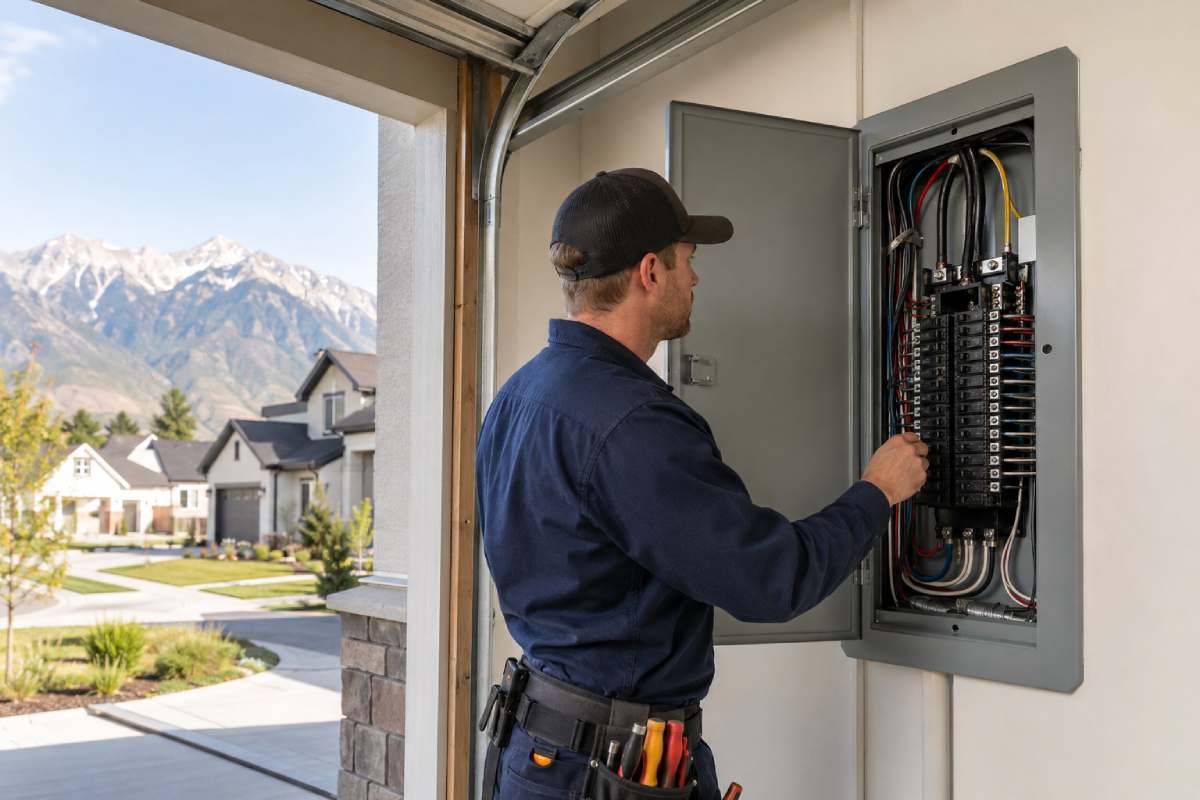
Most homes in Murray and Salt Lake City built before 1980 came with 60-amp or 100-amp electrical service. At the time, that was more than adequate. Today, a well-equipped household routinely draws 150–200 amps or more — especially with electric vehicle chargers, HVAC systems, tankless water heaters, and all the devices that come with modern life.
An undersized panel doesn’t just cause inconvenience; it can also cause damage. When a panel is consistently running near or at capacity, the breakers are working overtime. Breakers that trip constantly are doing their job — but repeated tripping wears them out, and worn breakers can eventually fail to trip when they should. That’s when wiring overheats without the safety shutoff activating.
Common signs your panel is undersized or overloaded:
- Breakers trip frequently, especially when you run multiple appliances at once
- Lights dim or flicker when a large appliance, like an AC unit, kicks on.
- You’ve added circuits by doubling up breakers (a practice called “double-tapping” that’s a code violation in most cases)
- Your panel still has a fuse box rather than circuit breakers.
4. Ungrounded Outlets
Two-pronged outlets — those without the third ground hole — are ungrounded. Homes wired before the mid-1960s were commonly built with two-wire systems. Grounding became a code requirement for new construction under the 1962 National Electrical Code, but many older homes in Salt Lake County were never updated.
Ungrounded outlets are more than just incompatible with modern appliances. Without a ground path, any fault in a device or appliance has nowhere to dissipate safely. That excess current can travel through the device, through the person using it, or cause sparks and fires within the wall.
A lot of homeowners “solve” this by using a three-to-two-prong adapter or by replacing the outlet face with a modern three-pronged outlet without actually running a ground wire. The outlet looks modern, but it’s still ungrounded— and deceptive. Proper solutions involve either running a ground wire back to the panel, installing GFCI protection, or rewiring the circuit.
5. DIY and Unpermitted Electrical Work
This one is less about the home’s age and more about what’s happened to it over the decades. Older homes — especially those that have passed through multiple owners — frequently have layers of DIY electrical work that was never permitted, never inspected, and never done to code.
In Murray and Salt Lake City, we see this constantly: junction boxes buried in walls without access panels, undersized wire spliced into circuits without proper connectors, outlets added to circuits that were already at capacity, and bathroom or outdoor work done without GFCI protection.
Unpermitted electrical work creates specific problems for homeowners. Insurance companies can deny claims if damage is traced to unlicensed or unpermitted work. Home sales can fall through when inspectors flag open permits or obvious code violations. And beyond the financial exposure, this work hasn’t been checked by anyone qualified to identify the hazards.
What to Do If Your Home Was Built Before 1980
You don’t need to panic — but you do need a plan. Here’s what we recommend to homeowners in Murray and Salt Lake City who have older homes:
Get a professional electrical inspection. A licensed electrician can assess the condition of your wiring, panel, grounding, and outlets, and provide a prioritized list of what needs attention. At Westover Electric, these inspections are thorough and come with honest, straight-talk recommendations — not a sales pitch for unnecessary work.
Prioritize safety over cosmetics. If your panel is undersized, your wiring is original aluminum, or you have K&T in active use, those need to come first — ahead of aesthetic upgrades. The hidden stuff is what actually puts your family at risk.
Pull permits for any electrical work. If you’re adding circuits, upgrading your panel, or doing any wiring work, make sure you pull permits and have the work inspected. This protects your home’s value and your insurance coverage.
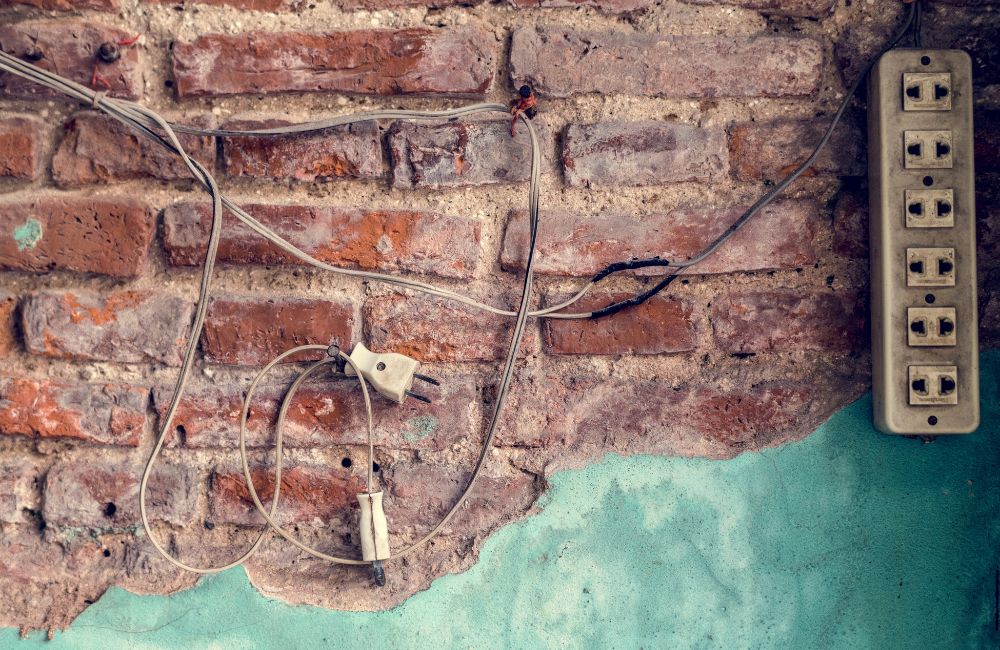
Don’t rely on power strips as a long-term solution. Daisy-chaining power strips or plugging one strip into another can overload the circuit and create a clear fire hazard. If you’re consistently running out of outlets, the answer is a new circuit — not more strips.
Frequently Asked Questions
How do I know if my Murray or Salt Lake City home has knob-and-tube wiring? K&T wiring is most common in homes built before the early 1950s. If your home is that age and has never had a full rewire, it may still have K&T. Signs include ceramic knobs or tubes visible in unfinished basements or attics, cloth-wrapped wire insulation rather than plastic sheathing, and a lack of grounded outlets throughout the home. The only definitive way to know is to have a licensed electrician inspect the system.
Is aluminum wiring dangerous, and do I need to rewire my whole house? Aluminum branch-circuit wiring is a recognized fire hazard when it’s connected to devices or at connections that aren’t rated for aluminum. However, a full rewire isn’t always necessary. In many cases, a licensed electrician can install CO/ALR-rated devices and make proper connections, significantly reducing the risk. The right answer depends on the extent of the aluminum wiring and its current condition — an inspection is the starting point.
My breakers keep tripping. Is that an emergency? Occasional tripping when you run multiple high-draw appliances isn’t unusual. But if a breaker trips repeatedly — especially on the same circuit, or for no obvious reason — that’s a sign of an overloaded or faulty circuit, and it warrants a professional look. Breakers that trip and then fail to reset, or that feel warm or smell like something is burning, should be treated as urgent.
What’s the difference between a two-prong and a three-prong outlet, and does it matter? Two-prong outlets are ungrounded, meaning there’s no third wire to carry excess current away from devices safely. Three-prong outlets can be grounded or GFCI-protected, providing different types of protection. Replacing a two-prong outlet face with a three-prong face without running a proper ground wire is a common shortcut that creates a false sense of safety. A licensed electrician can tell you what protection your outlets actually have.
How much does an electrical panel upgrade cost in Salt Lake County? Panel upgrade costs in the Salt Lake City and Murray area typically range from $1,500 to $4,000, depending on the size of the upgrade, the condition of the existing wiring, and whether service entrance work is required. Westover Electric provides free estimates with transparent pricing — no surprises. The cost of an upgrade is almost always far less than the cost of fire damage, failed home sale negotiations, or a denied insurance claim.
Does Westover Electric serve Murray and Salt Lake City? Yes. Westover Electric serves Murray, Salt Lake City, Sandy, Midvale, South Jordan, Draper, and other areas of Salt Lake County. Call (385) 732-3182 or request a free estimate online.
Looking for a Master Electrician in Murray or Salt Lake City?
When it comes to older homes in Salt Lake County, experience and credentials matter. Thomas Westover is a licensed Master Electrician — Utah’s highest level of electrical certification — with thousands of hours of verified field experience and the knowledge to handle everything from panel upgrades and rewiring to EV charger installations and full electrical inspections. As a fully licensed and insured electrical contractor serving Murray, Salt Lake City, Sandy, Midvale, South Jordan, and Draper, Westover Electric brings Master-level expertise to every job, pulls all required permits, and backs every project with professional accountability. Every review is 5 stars. Estimates are always free. If you have an older home and you’re not sure what’s behind the walls, that’s exactly the kind of call we’re built for.
Sources & References
- National Fire Protection Association (NFPA) — Electrical Fires in Home Structures: https://www.nfpa.org/education-and-research/research/nfpa-research/fire-statistical-reports/electrical-fires
- U.S. Fire Administration — Residential Building Electrical Malfunction Fire Trends (2014–2023): https://www.usfa.fema.gov/statistics/residential-fires/electrical.html
- U.S. Consumer Product Safety Commission — Aluminum Wiring in Homes: https://www.cpsc.gov/Safety-Education/Safety-Education-Centers/Aluminum-Wiring
- National Fire Protection Association — NFPA 70 (National Electrical Code): https://www.nfpa.org/codes-and-standards/nfpa-70-standard-development/70
- Utah Division of Occupational and Professional Licensing (DOPL) — Electrical Licensing: https://commerce.utah.gov/dopl/electrical/
- Utah Code Title 15A — State Construction and Fire Codes Act: https://le.utah.gov/xcode/Title15A/15A.html
- Vivint — 2024 House Fire Statistics: https://www.vivint.com/resources/article/house-fire-statistics
- Osceola Electric Cooperative — Signs of Electrical System Overload: https://www.osceolaelectric.com/signs-electrical-system-overload