Generator vs battery backup is one of the most common questions Murray, Utah homeowners are asking right now — and it’s a genuinely good question without a one-size-fits-all answer. Power outages in Salt Lake County aren’t a hypothetical. Between summer thunderstorms rolling in off the Wasatch, ice events in the winter, and the occasional grid disruption, losing power in Murray or Salt Lake City is a real possibility, so backup power is worth thinking through seriously.
What I see constantly as a licensed electrician working across Salt Lake County is homeowners who bought the wrong solution for their situation — either a generator sitting in the garage that never gets maintained, or a battery backup system that runs out of juice after six hours when what they actually needed was three days of coverage—both options work. The question is which one works for you.
This is the breakdown I give homeowners before we ever talk about installation.
How Each System Actually Works
Before comparing them, it helps to understand what you’re actually choosing between.
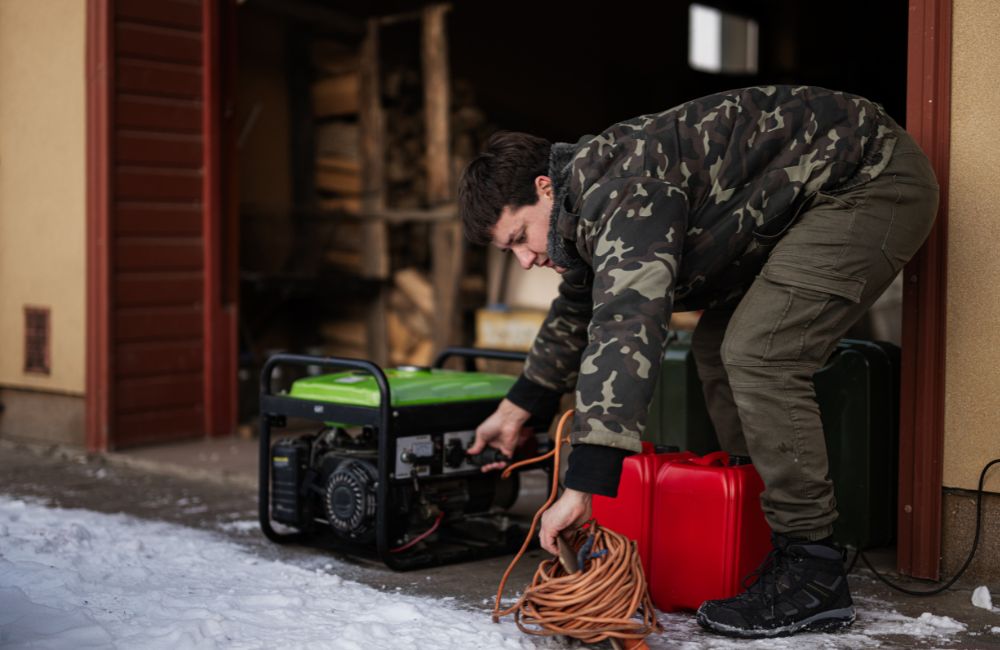
A standby generator is a permanently installed unit — usually natural gas or propane — that connects to your home’s electrical panel through a transfer switch. When grid power fails, it detects the outage automatically and starts within seconds. It runs on fuel from your existing gas line or a propane tank, which means it can keep going indefinitely as long as fuel is available. Portable generators work similarly but require manual setup, fuel storage, and extension cords or a manual transfer switch — they’re cheaper but considerably less convenient.
A battery backup system stores electricity — either from the grid or from solar panels — and releases it when the grid goes down. Modern systems like the Tesla Powerwall switch on within milliseconds of an outage, silently and automatically. They produce no noise, no fumes, and require no fuel. The tradeoff is capacity: a single battery holds a finite amount of energy, and once it’s depleted, you’re out of power unless you have solar to recharge it or the grid comes back.
Both connect to your home’s electrical panel. Both require a licensed electrician to install. And both have meaningful differences in cost, maintenance, runtime, and day-to-day practicality.
What a Standby Generator Does Well
For Murray and Salt Lake City homeowners who want unlimited runtime during extended outages, a natural gas standby generator is hard to beat. Connected to your home’s gas line, it runs as long as the gas keeps flowing — which in most outage scenarios means days, not hours.
Standby generators are the right call if your household has medical equipment that can’t go offline, if you work from home and need reliable power for days at a time, or if you want the peace of mind of knowing you’re covered no matter how long the grid is down.
The downsides are real though. Generators are loud — a running standby generator is comparable to a lawn mower in terms of noise. They require annual maintenance: oil changes, battery checks, and regular test runs. And most residential standby generator installations in the Salt Lake City area range from $10,000 to $18,000, including the unit, concrete pad, electrical permits, and gas line work. That’s a significant upfront investment for a system you hope to use rarely.
What a Battery Backup Does Well
A home battery backup system is the quieter, cleaner, lower-maintenance option. When the grid fails, it switches on automatically—most systems in under a second—with no noise, no exhaust, and nothing you have to start or monitor.
For most power outages in Murray and Salt Lake City, a battery backup handles the situation completely. Most outages in Salt Lake County are measured in hours, not days. A quality battery system like the Tesla Powerwall 3 carries 13.5 kWh of storage — enough to power essential circuits including your refrigerator, lights, internet, and furnace for 24 hours or more. Pair it with solar panels and the battery recharges during the day, giving you extended coverage without any fuel dependency at all.
Battery systems also do something a generator never can: they save you money when the grid is functioning. Paired with solar, you can offset your Rocky Mountain Power bill year-round — not just during outages. That changes the financial math considerably when comparing the two options.
The limitation is capacity. For extended outages without solar — think three or more days of cloudy weather with no grid — a battery alone may not be enough. And home battery systems typically cost $10,000–$20,000 or more depending on brand, capacity, and installation. The upfront cost is comparable to a generator, but without the ongoing fuel and maintenance expenses.
The Real Cost Comparison for Salt Lake County Homeowners
Cost is where this decision gets nuanced, and where a lot of national comparison guides miss the mark for local homeowners.
Standby Generator:
A whole-house standby generator installation in the Salt Lake City area typically runs $10,000–$18,000 installed, permitted, and connected. On top of that, natural gas or propane fuel costs for typical use add $300–$800 per year, plus annual maintenance. It’s a system that costs money every year whether you use it or not.
Battery Backup:
Home battery systems run $10,000–$20,000 installed depending on the brand and capacity—a single Tesla Powerwall 3 installed and permitted runs toward the lower end of that range. Two units — enough for extended whole-home coverage — push toward the higher end. The key difference is ongoing cost: a battery paired with solar has no fuel cost and minimal maintenance over its lifespan.
The Honest Bottom Line:
If your only goal is emergency backup for extended outages and you want unlimited runtime, a generator wins on practicality. If you want quiet, automatic backup for typical outages plus long-term energy savings, a battery wins on total value. If you want both, a combined solar-plus-generator setup covers every scenario — and a licensed electrician can install both under a single permit, saving high cost versus doing them separately.
What Murray and Salt Lake City Homeowners Should Consider
A few questions that usually clarify the right choice pretty quickly:
How long are your typical outages? If Salt Lake County outages in your area tend to resolve in a few hours, a battery system handles them comfortably. If you’ve lost power for multiple days during winter storms and that’s your primary concern, a generator gives you unlimited coverage.
Do you have or plan to get solar? A battery backup without solar still works, but solar dramatically improves the value proposition — it recharges the battery during the day and reduces your monthly power bill year-round. If solar is on your radar, a battery system is the natural companion.
How important is noise and convenience? A generator running in your backyard during an outage produces significant noise. For homeowners in Murray’s denser neighborhoods, that’s worth factoring in. A battery runs silently.
Does anyone in your home rely on medical equipment? For households where power continuity is a health issue rather than a convenience issue, a generator’s unlimited runtime is the safer choice.
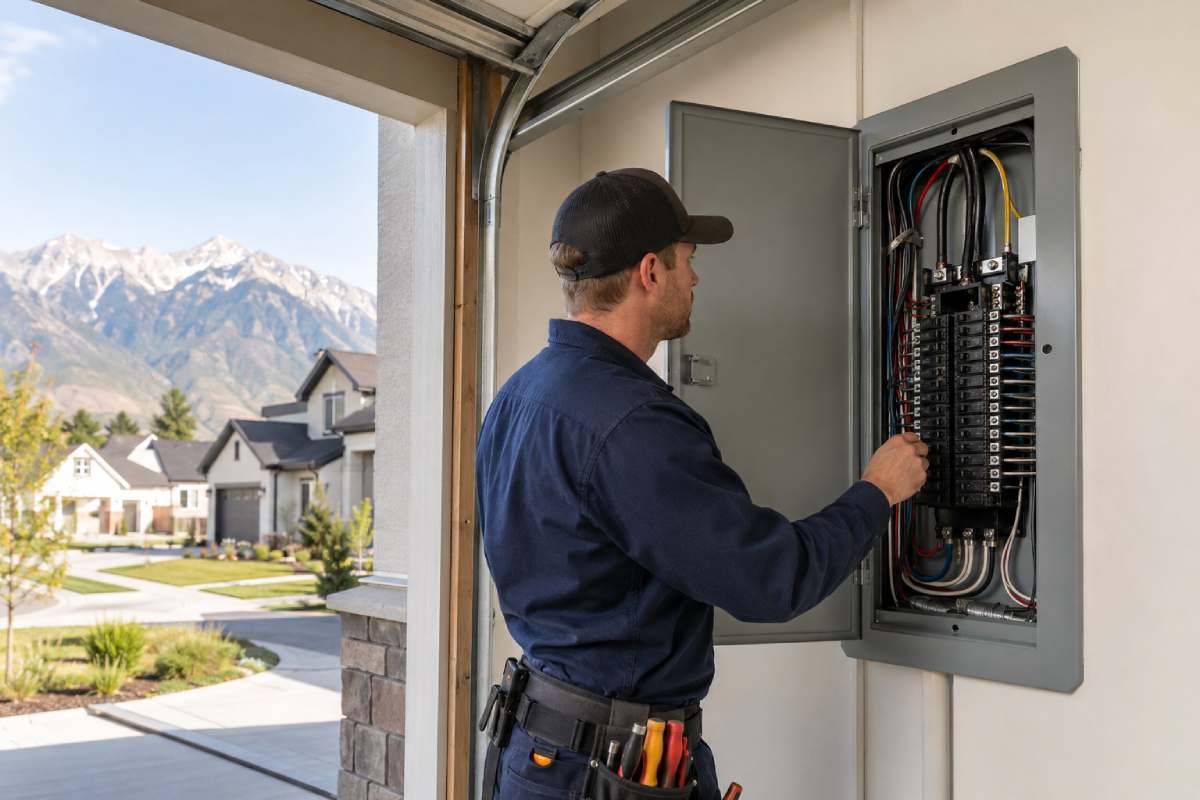
What does your panel look like? Both systems require a transfer switch or critical load panel and tie directly into your home’s electrical system. Older Murray and Salt Lake City homes with 100-amp service may need a panel upgrade before either system can be installed. A licensed electrician can assess your panel capacity before you commit to either option.
Permits and Installation: What to Expect in Salt Lake County
Both standby generators and battery backup systems require electrical permits in Murray and Salt Lake City. Neither is a plug-and-play installation — both involve a transfer switch or critical load panel, connections to your main electrical panel, and in the case of a generator, coordination with the gas line and potentially Rocky Mountain Power.
A licensed electrician handles all of this: the permit application, the panel work, the transfer switch installation, the inspection scheduling, and for generators, the gas line coordination. At Westover Electric, permits are included in every backup power project we take on. Getting this work done without a permit creates the same risks as any unpermitted electrical work — insurance exposure, complications at resale, and no documentation that the installation was done safely.
Frequently Asked Questions
Which is better for Murray Utah homeowners — a generator or a battery backup?
It depends on your priorities. If you want unlimited runtime for extended outages regardless of weather or fuel availability, a natural gas standby generator is the stronger choice. If you want quiet, automatic, low-maintenance backup for typical outages — and especially if you have or plan to get solar — a battery backup system is the better long-term investment. Most Murray and Salt Lake City homeowners are well-served by a battery system given the typical outage length in Salt Lake County.
How much does a standby generator installation cost in Salt Lake County?
Most residential standby generator installations in the Salt Lake City and Murray area run $10,000–$18,000 installed and permitted, including the unit, concrete pad, transfer switch, electrical work, and gas line coordination. Westover Electric provides free estimates with upfront, transparent pricing.
How much does a battery backup system cost in Murray, Utah?
Home battery systems in Salt Lake County typically run $10,000–$20,000 installed depending on brand and capacity. A single Tesla Powerwall 3 covers essential circuits for most typical outages. Two units provide whole-home coverage including HVAC. Pairing with solar improves the long-term value significantly.
Can a battery backup power my whole house in Murray, Utah?
A single battery system can power essential circuits — refrigerator, lights, internet, furnace — for 24 hours or more. Whole-home coverage including HVAC typically requires multiple battery units or a combination of battery and solar. A licensed electrician can calculate the right capacity for your specific home’s load before any equipment is purchased.
Do I need a permit for a generator or battery backup in Salt Lake County?
Yes. Both standby generators and home battery backup systems require electrical permits in Murray and Salt Lake City. Unpermitted backup power installations create the same risks as any unpermitted electrical work — potential insurance claim denials, complications at resale, and no documented safety inspection. Westover Electric handles all permitting on every backup power project.
Does Westover Electric install both generators and battery backup systems in Murray and Salt Lake City?
Yes. Westover Electric serves Murray, Salt Lake City, Millcreek, Sandy, Midvale, South Jordan, Draper, and throughout Salt Lake County. We handle the full installation, including panel work, transfer switches, permits, and inspections for both generator and battery backup systems. Call (385) 732-3182 or request a free estimate online.
Looking for a Master Electrician in Murray or Salt Lake City?
When it comes to generator vs battery backup in Murray, Utah, the right answer starts with an honest assessment of your home and your priorities — and that’s exactly what Westover Electric provides. Thomas Westover is a licensed Master Electrician — Utah’s highest level of electrical certification — with the hands-on experience to evaluate your panel, calculate your load, and recommend the backup power solution that actually fits your home. As a fully licensed and insured electrical contractor serving Murray, Salt Lake City, Sandy, Midvale, South Jordan, and Draper, Westover Electric handles every phase of backup power installation from panel assessment through permit and final inspection. Every review is 5 stars. Estimates are always free. If you want backup power done right, that’s the call to make.
Sources & References
- EnergySage — Home Battery Backup Power vs Generators 2026: https://www.energysage.com/energy-storage/battery-backup-power-vs-generators-which-is-right-for-you/
- Elite Electric — Home Backup Power Solutions Utah: https://eliteelectricpro.com/home-backup-power-solutions-utah/
- Aurora Solar — Battery Backup vs Generator: https://aurorasolar.com/home-solar/blog/energy-101/battery-backup-vs-generator
- SolarTech Online — Battery Backup vs Generator Complete Comparison Guide: https://solartechonline.com/blog/battery-backup-vs-generator-comparison-guide/
- National Fire Protection Association — NFPA 70 National Electrical Code: https://www.nfpa.org/codes-and-standards/nfpa-70-standard-development/70
- Utah Division of Occupational and Professional Licensing (DOPL): https://commerce.utah.gov/dopl/electrical/
- Rocky Mountain Power — Residential Energy: https://www.rockymountainpower.net
- U.S. Department of Energy — Home Battery Storage: https://www.energy.gov/energysaver/battery-storage-technology