Holiday lighting electrical safety in Murray, Utah is something most homeowners don’t think about until a breaker trips on Christmas Eve, a strand of outdoor lights sparks in the rain, or worse. The holidays put more demand on your home’s electrical system than almost any other time of year — and in Murray and Salt Lake City, where older homes with undersized panels are common, that extra load has real consequences if it isn’t managed right.
I’ve seen the aftermath of holiday electrical fires. I’ve also been called out at 8 pm on a December Saturday because someone’s outdoor display tripped a circuit, and nobody could figure out why. Most of these situations are completely preventable with a little planning before the decorating starts.
This is the holiday electrical guide I give Murray and Salt Lake City homeowners before the season kicks off.
Why the Holidays Are Hard on Your Home’s Electrical System
It’s not just the lights. During the holidays, most homes run decorations, space heaters, holiday appliances, and gatherings that add extra loads— often simultaneously— on circuits already carrying a full everyday load.
According to the National Fire Protection Association, 44% of home Christmas tree fires involve electrical cords, overloaded outlets, or damaged lighting. That’s not a fringe risk — it’s the majority of tree fires. And those numbers have been climbing again in recent years after a period of decline. edison
For older Murray and Salt Lake City homes — the kind built before 1990 with 100-amp panels and wiring that predates modern demand — the holiday season is when an already-strained system gets pushed hardest. Understanding why helps you make smarter decisions about where and how you plug things in.
The 6 Holiday Electrical Safety Rules That Actually Matter
1. Never Overload a Single Outlet or Circuit
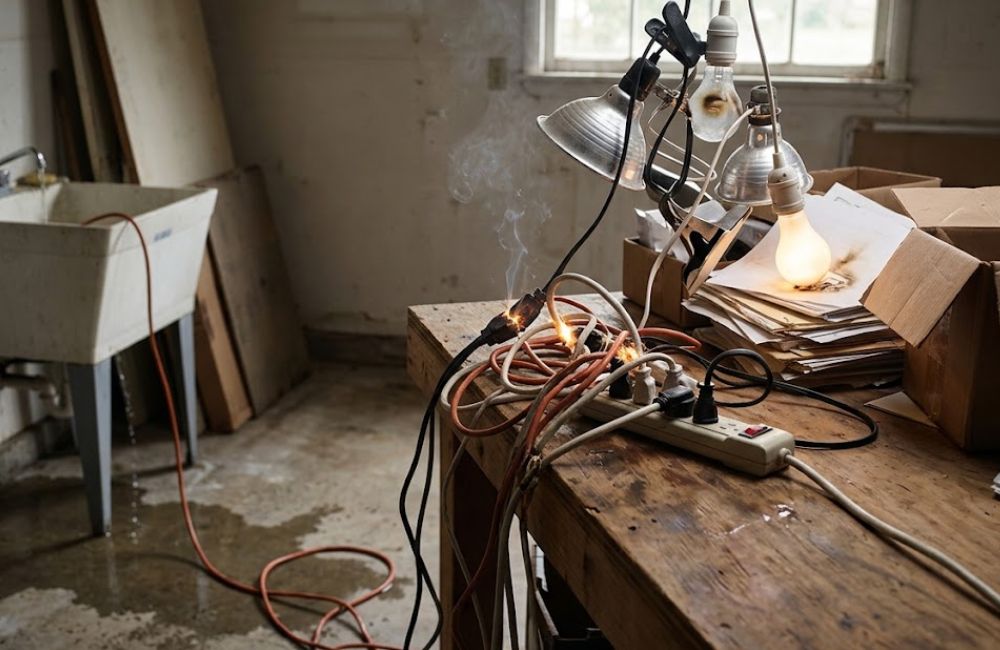
This is the most common holiday electrical mistake in Murray homes, and it’s the one most likely to end badly. Electrical overload prevention is critical during the holidays when you may have multiple lights and powered decorations like inflatables plugged into the same circuits. a1united
The fix isn’t complicated — spread your decorations across multiple outlets on different circuits rather than daisy-chaining everything into one area. Each circuit in your home has a maximum rated load. Stacking power strips and extension cords doesn’t increase that limit — it just makes it easier to exceed it quietly.
Signs you’ve already overloaded a circuit: breakers tripping repeatedly, lights flickering when decorations are running, outlets or power strips that feel warm to the touch, or a buzzing sound from walls or outlets. Any of these means back off the load on that circuit immediately.
2. Use Only Lights Rated for Their Location
Outdoors, use only lights, cords, animated displays, and decorations rated for outdoor use. Indoor-rated lights aren’t weatherproofed — they’re not designed to handle Utah’s freeze-thaw cycles, moisture from snow and ice, or the temperature swings Murray gets between December afternoons and overnight lows. Using indoor-rated lights outside creates insulation deterioration, connection corrosion, and shock and fire hazards that aren’t always visible until something goes wrong. safeelectricity
Look for the UL or ETL listing on every product before it goes outside. If the packaging doesn’t specify outdoor rating, assume it’s indoor only.
3. Inspect Every Strand Before It Goes Up
Before you start decorating, inspect your string lights carefully. If you find any defective bulbs or components, replace them right away to avoid electrical hazards. randyselectric
Specifically check for: frayed or cracked insulation along the cord, broken or missing bulbs, bent or corroded plugs, burn marks anywhere on the strand, and loose connections at sockets. A damaged strand that worked fine last year may have deteriorated in storage — heat, cold, and compression all degrade insulation over time. If something looks wrong, replace it. Lights are inexpensive. Electrical fires are not.
4. Use GFCI Protection for All Outdoor Connections
Plug cords into outlets with GFCIs. Use a portable GFCI if your outdoor outlets don’t have them. safeelectricity
In Murray and Salt Lake City, outdoor outlets on homes built before the late 1970s may not have GFCI protection. GFCI protection can be the difference between a wet connection that harmlessly trips and the same connection causing a shock or fire. If you’re not sure whether your outdoor outlets are GFCI-protected, look for the TEST and RESET buttons on the outlet face — if they’re not there, the outlet isn’t GFCI-protected, and you should use a portable GFCI adapter for any outdoor holiday connections.
This is also a good time to have a licensed electrician upgrade your exterior outlets to GFCI if they aren’t already. It’s a minor job with a major safety payoff.
5. Switch to LED Lights if You Haven’t Already
According to ENERGY STAR holiday lighting guidelines, certified LED light strings consume about 70% less electricity than incandescent light strings. Beyond the energy savings, LEDs run significantly cooler than incandescent bulbs, reducing fire risk near trees, garlands, and flammable decorations and easing the heat load on your circuits. For Murray homeowners with older panels running near capacity, switching to LED can meaningfully reduce the total load your holiday display puts on the system. homebusinessmag
6. Turn Off Decorations When You Leave or Go to Bed
Always turn off decorative holiday lights before bed or before leaving home. A timer can help make sure this happens. safeelectricity
An outdoor timer costs less than $20 and eliminates the single biggest controllable risk factor in holiday electrical fires — decorations running unattended overnight or while nobody is home. Program it to turn displays off at bedtime and back on at dusk. It also saves on your Rocky Mountain Power bill, which is a welcome bonus during a month when heating costs are already elevated.
Outdoor Holiday Lighting: The Extra Considerations
Outdoor displays in Murray and Salt Lake City face conditions that indoor lighting doesn’t — subfreezing overnight temperatures, snow and ice accumulation, and the kind of freeze-thaw cycling that accelerates insulation deterioration and connection corrosion. A few outdoor-specific points worth knowing:
Keep connections off the ground. Extension cord connections sitting in snow, mud, or standing water are a shock and corrosion risk. Elevate connections where possible and use weatherproof outlet covers rated for in-use conditions — the kind that keep the cover closed around the plug while it’s connected.
Don’t use staples, nails, or tacks to secure lights. These can pierce insulation and create a fault inside the wall or along the cord. Use plastic clips designed for holiday light installation instead.
Don’t run extension cords under rugs, through doorways, or over gutters. Each of these creates pinch points that damage insulation over time. Extension cords used outdoors should be rated for outdoor use — look for a “W” in the designation on the cord’s tag.
Keep displays away from overhead lines. Take extra care not to throw strings of lights over tree branches that are near power lines and service connections. In Murray’s older neighborhoods, service drop wires running from the utility pole to the house can be lower than you’d expect. Contact between a light strand and an energized service line is a potentially fatal hazard. safeelectricity
When Your Home Needs More Than Safety Tips
Sometimes the issue isn’t how you’re decorating — it’s what’s behind the walls. If your breakers trip every holiday season despite careful load distribution, if your outdoor outlets aren’t GFCI-protected, or if your panel is already near capacity before the first decoration goes up, those are electrical system issues decorating habits can’t fix.
Common pre-holiday electrical projects that make a real difference in Murray and Salt Lake City:
Adding a dedicated outdoor circuit. If you run significant outdoor displays every year, a dedicated outdoor circuit — separate from your interior circuits — means your display never interferes with interior loads and gives you a clean, properly rated circuit for outdoor use.
Upgrading exterior outlets to GFCI. If your outdoor outlets predate GFCI requirements, upgrading them before the holiday season is a minor job that eliminates one of the most common outdoor electrical hazards.
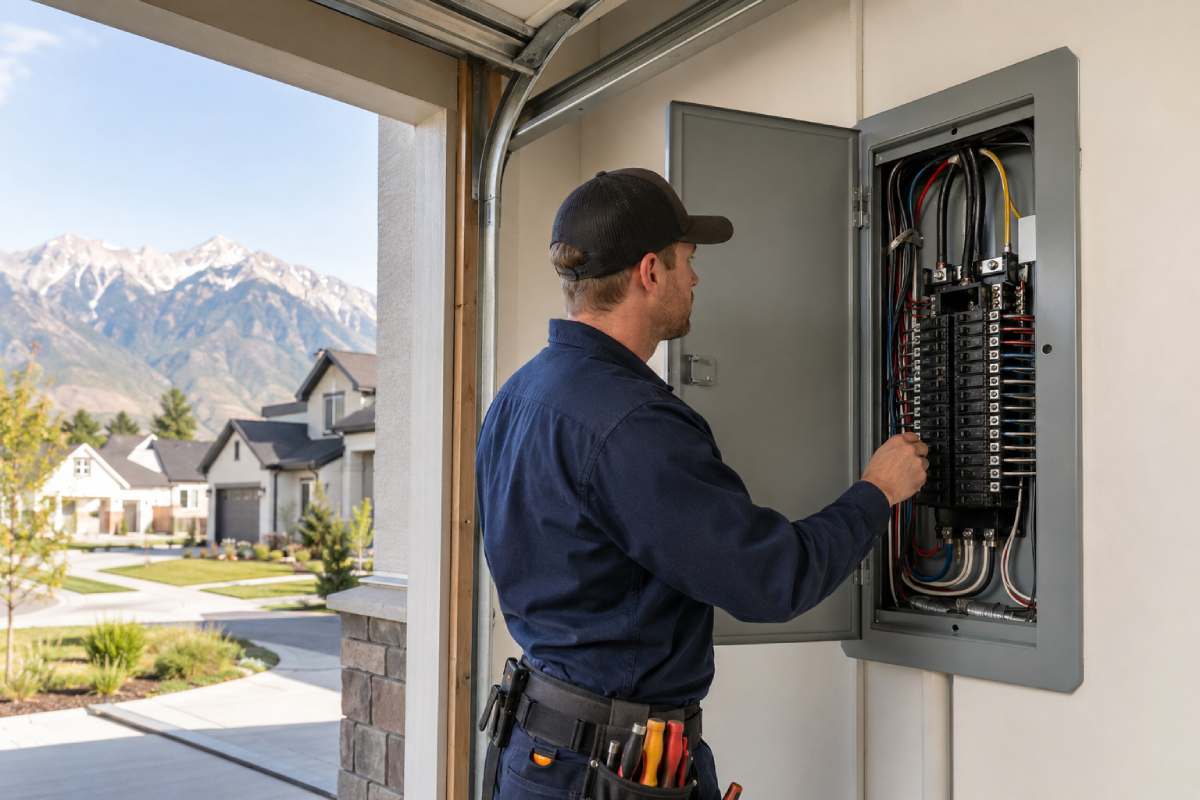
Panel assessment. If your home has a 100-amp panel and you’re already running near capacity in November, it’s worth knowing what headroom you have before adding holiday loads. A licensed electrician can give you that assessment quickly and honestly.
At Westover Electric, we handle all of these in Murray, Salt Lake City, and throughout Salt Lake County. Estimates are always free.
Frequently Asked Questions
How many lights can I plug into one outlet in my Murray home?
Most standard 15-amp household circuits can safely handle 1,440 watts of continuous load — 80% of the 1,800-watt rated maximum. LED holiday lights typically draw 2–4 watts per strand, so a single 15-amp circuit can safely handle a significant display. The problem arises when holiday lights share a circuit with other loads — kitchen appliances, space heaters, or electronics. Spread holiday loads across multiple circuits, and avoid plugging decorations into circuits that carry other significant loads.
Are my outdoor outlets safe for holiday lighting in Salt Lake County?
If your outdoor outlets have TEST and RESET buttons on the face, they’re GFCI-protected and appropriate for holiday lighting. If they don’t, they’re unprotected and should be upgraded before you use them. For homes built before 1978 in Murray and Salt Lake City, unprotected outdoor outlets are common. A licensed electrician can upgrade them quickly — Westover Electric handles these throughout Salt Lake County.
Can I leave outdoor holiday lights on overnight in Murray, Utah?
It’s not recommended. Leaving lights running unattended overnight or while the house is empty is a primary risk factor in holiday electrical fires. An outdoor timer eliminates this risk — program it to shut everything off at midnight or your preferred time, then turn it back on at dusk. It costs less than $20 and is one of the most effective safety steps a Murray homeowner can take.
Why do my breakers trip when I run holiday lights?
Repeated breaker trips during the holidays mean the circuit is being asked to carry more load than it’s rated for. Redistribute your display across multiple circuits, switch to LED lights if you’re using incandescent, and identify what else is sharing the circuit with your decorations. If trips continue after redistributing the load, a professional may need to evaluate the circuit or panel.
Does Westover Electric handle holiday electrical work in Murray and Salt Lake City?
Yes. Westover Electric serves Murray, Salt Lake City, Millcreek, Sandy, Midvale, South Jordan, Draper, and throughout Salt Lake County. Whether it’s a GFCI outlet upgrade, a dedicated outdoor circuit, or a panel assessment before the holiday season, estimates are always free. Call (385) 732-3182 or request a free estimate online.
Looking for a Master Electrician in Murray or Salt Lake City?
Holiday lighting electrical safety in Murray, Utah starts with knowing your home’s system can handle what you’re asking of it. Thomas Westover is a licensed Master Electrician — Utah’s highest level of electrical certification — with the experience to assess your panel, upgrade your outdoor outlets, add dedicated circuits, and ensure your home is ready for whatever you plan to put up this season. As a fully licensed and insured electrical contractor serving Murray, Salt Lake City, Sandy, Midvale, South Jordan, and Draper, Westover Electric brings Master-level expertise to every job, pulls all required permits, and backs every project with professional accountability. Every review is 5 stars. Estimates are always free.
Sources & References
- National Fire Protection Association — Christmas Tree Fires: https://www.nfpa.org/education-and-research/research/nfpa-research/fire-statistical-reports/christmas-tree-and-holiday-fires
- Safe Electricity — Electrical Safety Tips for the Holidays: https://safeelectricity.org/safety-tips/electrical-safety-tips-holidays/
- ENERGY STAR — Holiday Lighting: https://www.energystar.gov/products/lighting_fans/holiday_lights
- A1 United — Holiday and Outdoor Outlet Safety: https://www.a1united.net/blog/holiday-outlet-safety/
- Professional Electric — Electrical System Safety Tips for Exterior Holiday Lighting: https://www.professionalelectricinc.net/electrical-system-safety-tips-exterior-holiday-lighting-installations/
- Randy’s Electric — Electrical Safety Tips During the Holiday Season: https://www.randyselectric.com/blog/christmas-holiday-electrical-safety-reminders/
- HomeBusiness Magazine — Safer, More Energy-Efficient Holiday Lighting: A 2026 Homeowner’s Guide: https://homebusinessmag.com/blog/holidays/safer-more-energy-efficient-holiday-lighting-2026-homeowners-guide/
- Utah Division of Occupational and Professional Licensing (DOPL): https://commerce.utah.gov/dopl/electrical/